
作者:百年不渡 分类:未来幻想 点击:141次 下载:1024003次 大小:70M 日期:2026-08-26
使徒行者
China’s Jan-July rare-earth exports fall 10%; China Rare Earth Group sees ‘upward’ market conditions_我的网站

A |
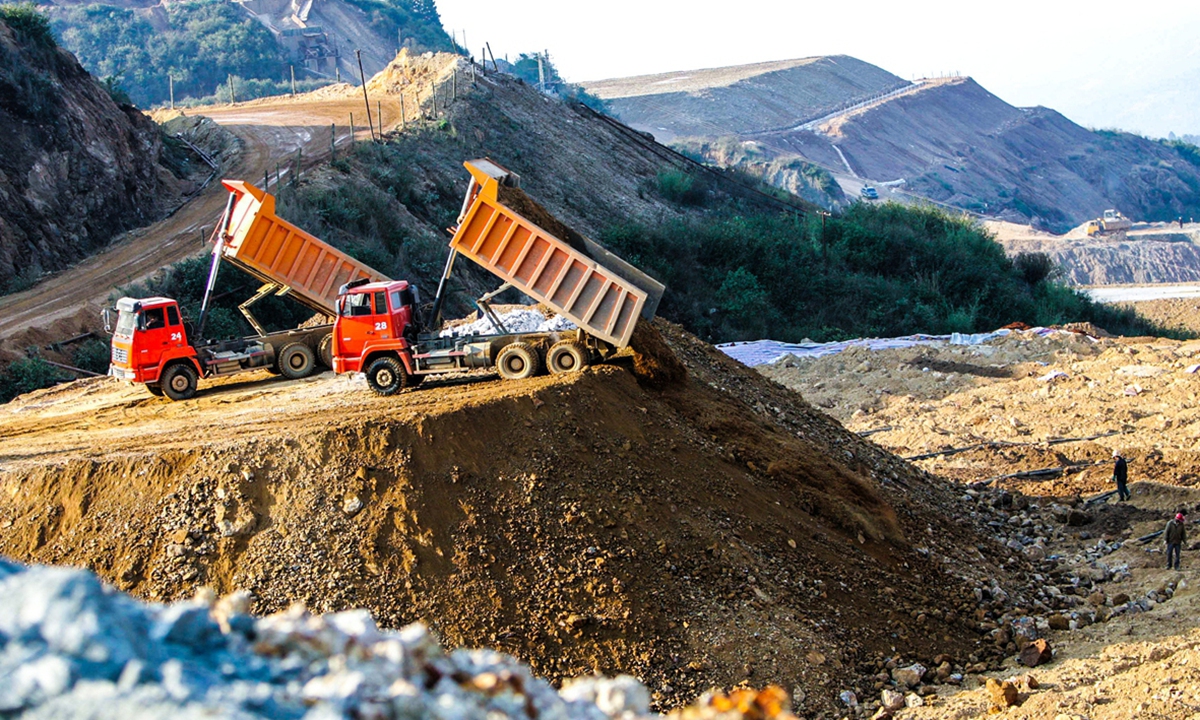
China rare-earth exports totaled 4,223.5 tons in July, and cumulative exports reached 34,706.3 tons in the first seven months of 2026, down 10 percent year-on-year, Chinese customs data showed on Friday.
Meanwhile, China imported 9,451.3 tons of rare earths in July, bringing total imports in the first seven months of 2026 to 63,323.0 tons, down 5.5 percent year-on-year, according to the data from the General Administration of Customs (GAC).
Also on Friday, China Rare Earth Group reported revenue of 1.647 billion yuan in the first six months of 2026, down 12.19 percent year-on-year, and net profit attributable to shareholders of the listed company of 237 million yuan, up 46.53 percent year-on-year.
According to the company's semi-annual report, the supply-demand landscape in the rare-earth industry continued to adjust and improve. Driven by multiple favorable factors, including rare-earth industry policies and a boost in downstream market demand, market conditions trended upward overall, it said.
In October 2025, China's Ministry of Commerce and the GAC announced export control measures on items related to superhard materials, rare earth equipment and materials, and batteries, according to a Xinhua News Agency report.
Effective from November 8, 2025, exports of items related to superhard materials, equipment and raw materials related to rare earths, five medium and heavy rare earth elements including holmium, lithium batteries, as well as synthetic graphite anode materials, will not be permitted without approval, the Ministry of Commerce stated, per Xinhua.
The ministry said that China implements export control measures in accordance with laws and regulations, which conforms to international common practice and is in line with better safeguarding China's national security and interests, and better fulfilling its international obligations, such as its commitment to non-proliferation.
Wu Chenhui, an independent analyst specializing in the critical minerals sector, told the Global Times on Friday that rare earths are strategic mineral resources. China's move to impose export controls on rare earths is in accordance with the law and is an internationally accepted practice, as well as a necessary measure to safeguard national security and the stability of industrial and supply chains.
The relevant measures taken by China have always adhered to the principles of rationality, moderation, and prudence, Wu said, adding that they are consistent with domestic laws and regulations and fully take into account the normal needs of the global civilian sector.
A spokesperson for the Chinese Ministry of Commerce said on April 9 that China remains committed to safeguarding the security and stability of global industrial and supply chains, fully taking into account reasonable civilian needs and concerns worldwide, including those of the US, and actively promoting and facilitating compliant trade.
Export applications meeting the conditions for legitimate civilian use will be approved in accordance with the law, said the spokesperson.
"China has always approved export applications that comply with the requirements and are for legitimate civilian purposes, in accordance with laws and regulations. The relevant policies are not targeted at any specific country; rather, they aim to promote the high-quality development of the rare earth industry and maintain the safety and stability of global industrial and supply chains," Wu said.
。 PASO CANOAS, Costa Rica -- The fleet of buses roared past the Panama-Costa Rica border.Hundreds of Venezuelan, Haitian and Ecuadorian migrants pressed their faces to the windows as they looked out onto a sign that read “Welcome to Costa Rica.” But few of them will see more of the country than the winding roads through foggy glass.That's because last week Costa Rica and Panama announced that, amid a historic crush of people headed to the United States, thousands of migrants a day would be bussed from the jungle-clad Darien Gap through their territories to the Nicaraguan border.The move is the latest patchwork solution by governments in Central America that often have appeared more concerned with lessening the impact on their own nations than complying with pressure from the Biden administration to keep migration levels in check. Regional leaders will seek longer term solutions at a migration summit in Mexico on Sunday.For many undertaking the dangerous journey north, like María Angelys, a 30-year-old Venezuelan traveling with her 2-year-old daughter, the bus program sent a clear message: You’re not welcome.“There are tons of Venezuelans everywhere, and the reality is that they don’t want us here,” said Angelys, waiting in a Costa Rican detention facility for a bus. Angelys, who left Venezuela in October due to the economic crisis in her country, said she had hoped to rest after trekking days through the rugged jungle dividing Colombia and Panama. But conditions in Costa Rica's migrant camp were so bad she wanted to continue on as fast as possible.Angelys and her daughter are among more than 420,000 migrants to cross the Darien Gap this year. They wind their way through Central America and Mexico to the U.S.-Mexico border, where U.S. authorities say they’ve stopped migrants more than 1.8 million times in the first 11 months of this fiscal year.The volume even prompted the Costa Rican government to declare a state of emergency in late September. It was a drastic step in a country long known for its open asylum laws and hospitality.“We don’t have the capacity to take on this flow of people,” Jorge Rodríguez, the vice minister to the president, said. “Aid has been generous, but it’s not enough.”Buses pick migrants up from camps in eastern Panama, and transport between 1,500 and 2,000 people a day across Costa Rica's border. They’re dropped off in cramped detention facilities where most sleep on green army cots, bunk beds, cardboard or in tents on the ground where some say liquid from portable toilets leaks.Migrants are not permitted to leave the fenced-off buildings, once a factory, until they buy a bus ticket. A number of migrants told The Associated Press on Monday that they hadn’t eaten since the weekend. Most migrants buy their own bus tickets, paying $30 per person.“You’re Costa Rica and you have a hundred thousand Venezuelan, Chinese, Indians and Ecuadorians in your territory. What do you do? You can’t afford to send them back. This is the least bad option for them,” Adam Isacson, an analyst tracking migration for the Washington Office on Latin America said.It “keeps the migration out of sight, out of mind,” he added, but passes the problem along to the next country.Rodríguez, the vice minister, said while camps “don’t have the best conditions,” it is still better than before when migrants slept on the street. The government is working to address the situation, he said, but still needs training for aid staff, as well as donations of food, beds and vaccines to stop the spread of disease.Angelys, the Venezuelan mother, was among dozens of people waiting in line at Western Union inside the facility for hours for a transfer of $200 from her husband in Chicago to buy bus tickets. She cradled her daughter as other children played and slept on the ground nearby."On one hand, I see it as really good, you get out of the country quickly," she said. “The objective is the United States, no? Not to stay here. But there are many more that don't have the money."Others like 25-year-old Venezuelan migrant Ebrard Sánchez spent his last $120 paying for the government-organized buses from Panama to Costa Rica. The ride was a welcome respite for his wife and 7-year-old son after being robbed in the jungle.Without anyone to transfer the $90 they needed to board the bus to the Nicaragua border, the family had been in the migrant camp for five days waiting for one of the few bus trips donated by companies or aid groups.Sánchez said they would have never climbed aboard if they had known they wouldn't be able to leave the facility."We honestly feel as if we were in prison,” he said. “All we want to do is work, and everyone is closing their doors on us.”Despite two officials and a dozen migrants in the camp telling the AP that migrants are not allowed to leave the camp, Rodríguez, the vice minister, said migrants are not prohibited from exiting, but that doing so would be illegal due to their migratory status.Other countries on the path north — which have long been the source of migration — have scrambled to cope in different ways.In Nicaragua, migration has seen little control, and by most accounts is speedy.Daniel Cano, a 27-year-old Venezuelan who had made it to southern Honduras with his wife and dog, said they crossed Nicaragua in 13 hours without problems. Other migrants who recently crossed Nicaragua said authorities made them get on buses that delivered them directly to the Honduran border.Honduras offers its own host of problems. Migrants can move freely, unlike in Costa Rica, but they lack basic sanitation and are living in deplorable conditions.Denilson Borges, coordinator for Doctors without Borders in the Honduran city of Danli, said the number of migrants crossing Honduras has created a health emergency. Doctors are treating everything from respiratory infections to injuries from violent attacks. Last month, Honduras President Xiomara Castro called it “a humanitarian crisis” requiring a regional response.Honduran immigration officials issue on average 4,000 five-day transit permits to arriving migrants each day in the southern cities of Danli and Trojes.Tents occupy any scrap of greenspace in Danli. At one park, 48-year-old Suhail Briceño rested in her family’s small tent squeezed alongside some two dozen others. Black plastic sheeting was spread over it against frequent rain showers. There were no public toilets.The Venezuelan, struggling with stomach problems, had been living there for two weeks with her husband and other relatives waiting for her son to wire them money to continue moving north. The U.S. government wants countries like Costa Rica and Honduras to manage the flow while trying to deal with the thousands crossing their borders. U.S. Assistant Secretary of State for Western Hemisphere Affairs Brian Nichols told media earlier this month that while such countries are doing a lot “they need to step up and do more.”The moves by Costa Rica and Panama come after weeks of pleading for more international aid to cope with migration.Without ready solutions, leaders from sending countries like Cuba, Venezuela and Haiti, along with Central American transit countries, will meet in Mexico on Sunday to discuss migration and what's pushing people to flee their countries. Biden and other leaders have long touted tackling the roots of migration — corruption, violence and economic crisis — but so far results are limited. “We have an international community that is in denial on how to deal with Venezuela, how to deal with Haiti, how to deal with Nicaragua," said Manuel Orozco, director of the migration, remittances and development program at the Inter-American Dialogue. "And these (transit) countries are the ones facing the consequences.”___Associated Press writers Marlon González in Danli, Honduras and Elliot Spagat in San Diego contributed to this report.。
Current article:http://swqx.fanfutaopoulaxiong.pics/abt/20260826/4477.html
Published on:01:18:03


使徒行者TXT下载声明:
1 我的网站免费提供的使徒行者,均由网友上传,供下载测试之用,不作商业用途,下载后请二十四小时后删除!
2 我们根据txt小说全文所整理出使徒行者txt电子书全集免费下载,由程序自动生成使徒行者txt下载文件。
3 书友所发表的txt小说使徒行者的相关评论,并不代表本站赞同使徒行者txt下载或者支持使徒行者的读者观点。
4 如果发现小说《使徒行者txt全集》无法下载未及时更新请联系我们。如果您喜欢使徒行者txt电子书,请支持作者到书店购买正版图书。感谢您的合作与支持。
5 好看的小说使徒行者是作者"百年不渡"的最新力作,使徒行者电子书由网友发布;小说使徒行者版权属于作者所有,如果侵犯您的利益,请通知我们。